
INTRODUCTION
UT Registration Plus (UTRP) is a Chrome extension that allows students to easily register for classes.
UTRP is a Chrome extension used by over 60,000 UT Austin students to make class registration easier. It provides enhanced course information, professor data, grade distributions, and lets students build mock schedules, which are features not offered in the university’s native system. The tool is maintained by Longhorn Developers, a student organization that creates products for the UT community. In May 2025, I stepped into the role of UX Lead to guide UTRP’s first formal design and research strategy.
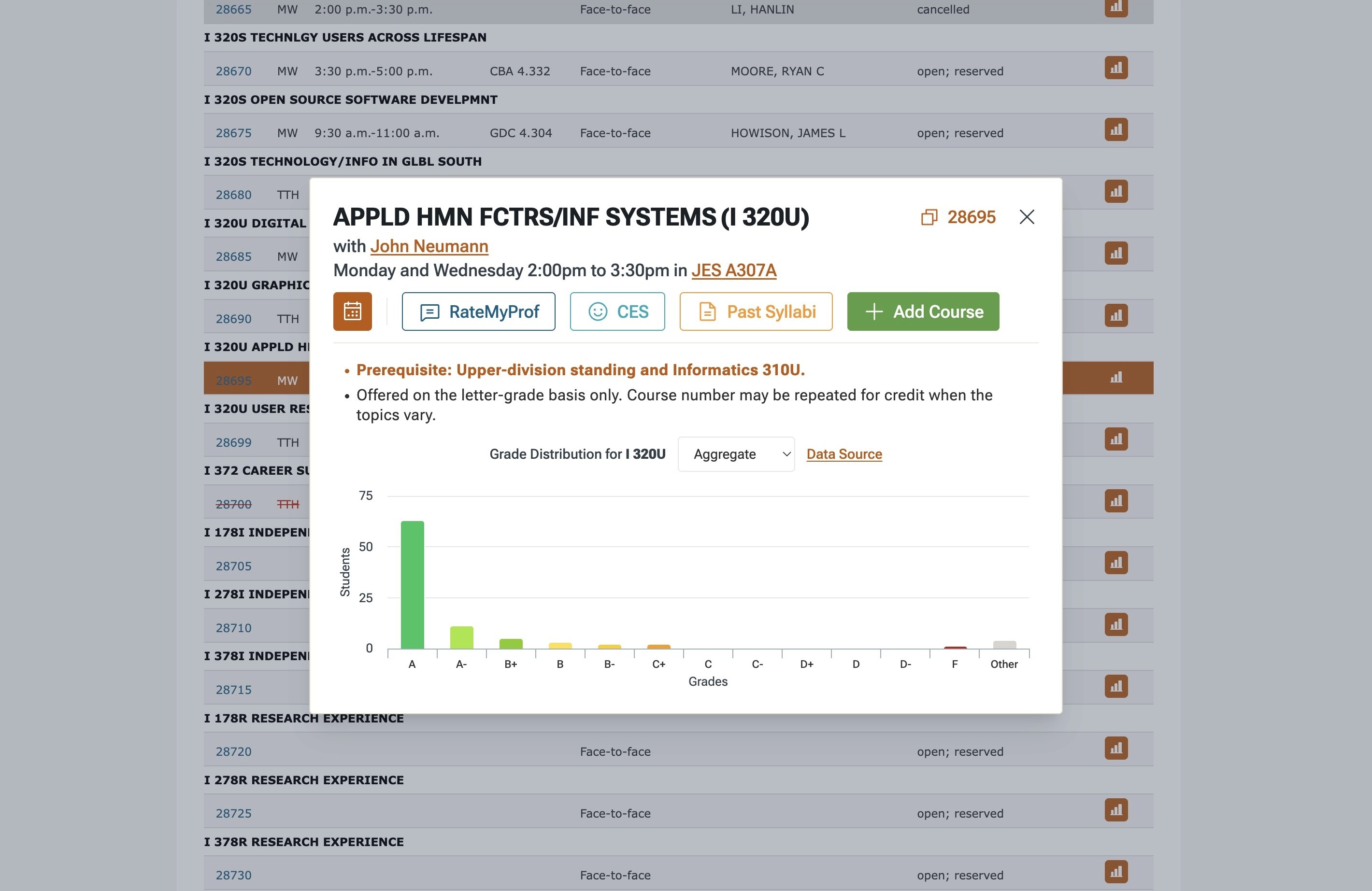
Course modal from UT Registration Plus
PROBLEM
Despite being well-established, UTRP has never had formal UX research
Despite its large user base, UTRP had never undergone any UX research. Most improvements were made by frontend developers based on assumptions, quick fixes, or surface-level feedback from students. A feedback form existed, but like many products, users often requested features that didn’t address their underlying problems.
SOLUTION PREVIEW
Two major usability fixes addressing key problems, plus a dark mode extension for enhanced usability
1/3
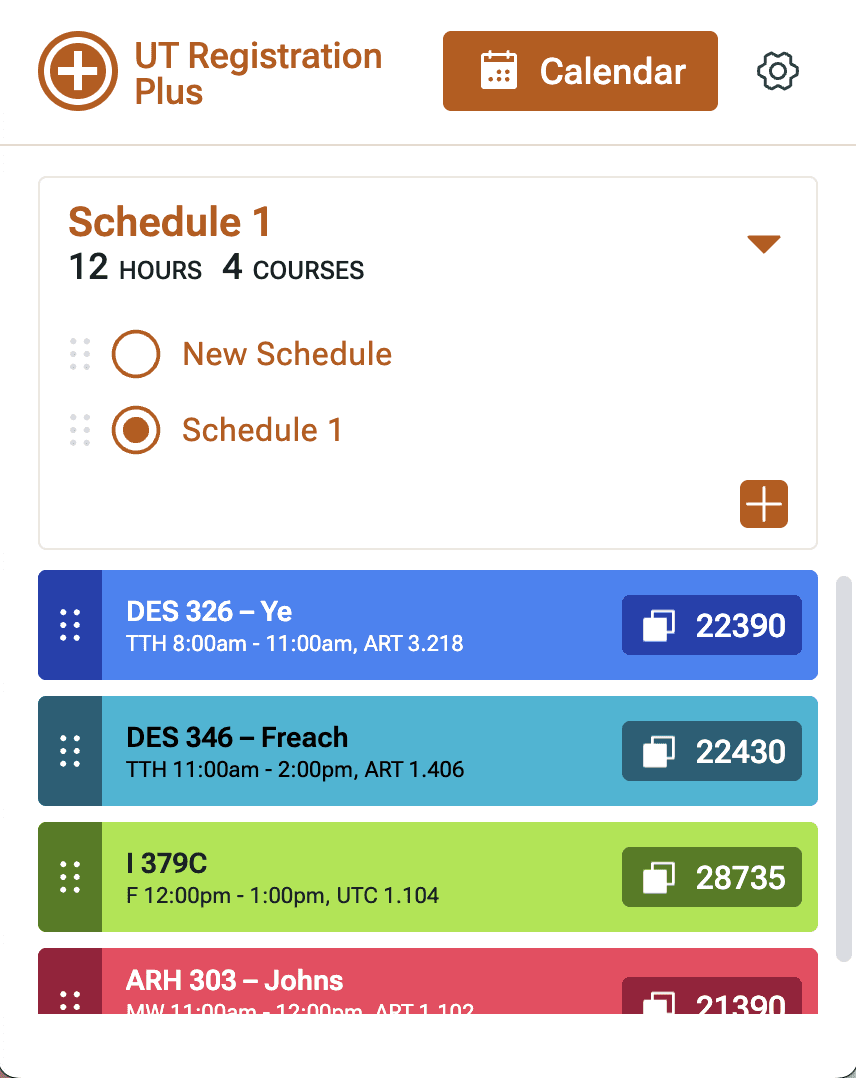
Surfacing visibility of multiple schedule feature
During usability testing, we discovered that 60% of users skipped the feature to change schedules from the extension popup, instead navigating to the main page. To improve visibility, we redesigned the popup layout to make this feature clearer and easier to access.
BEFORE
AFTER
2/3
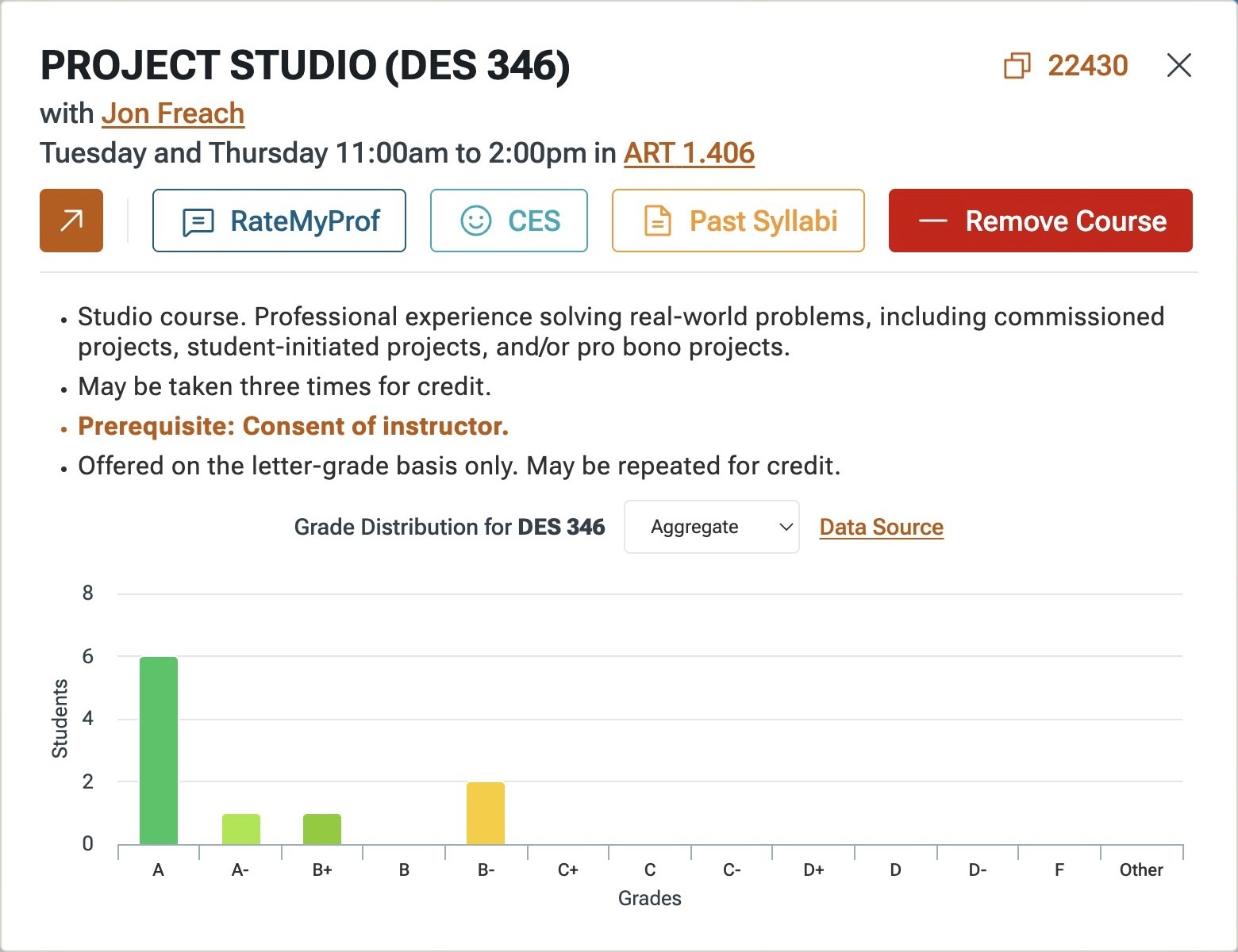
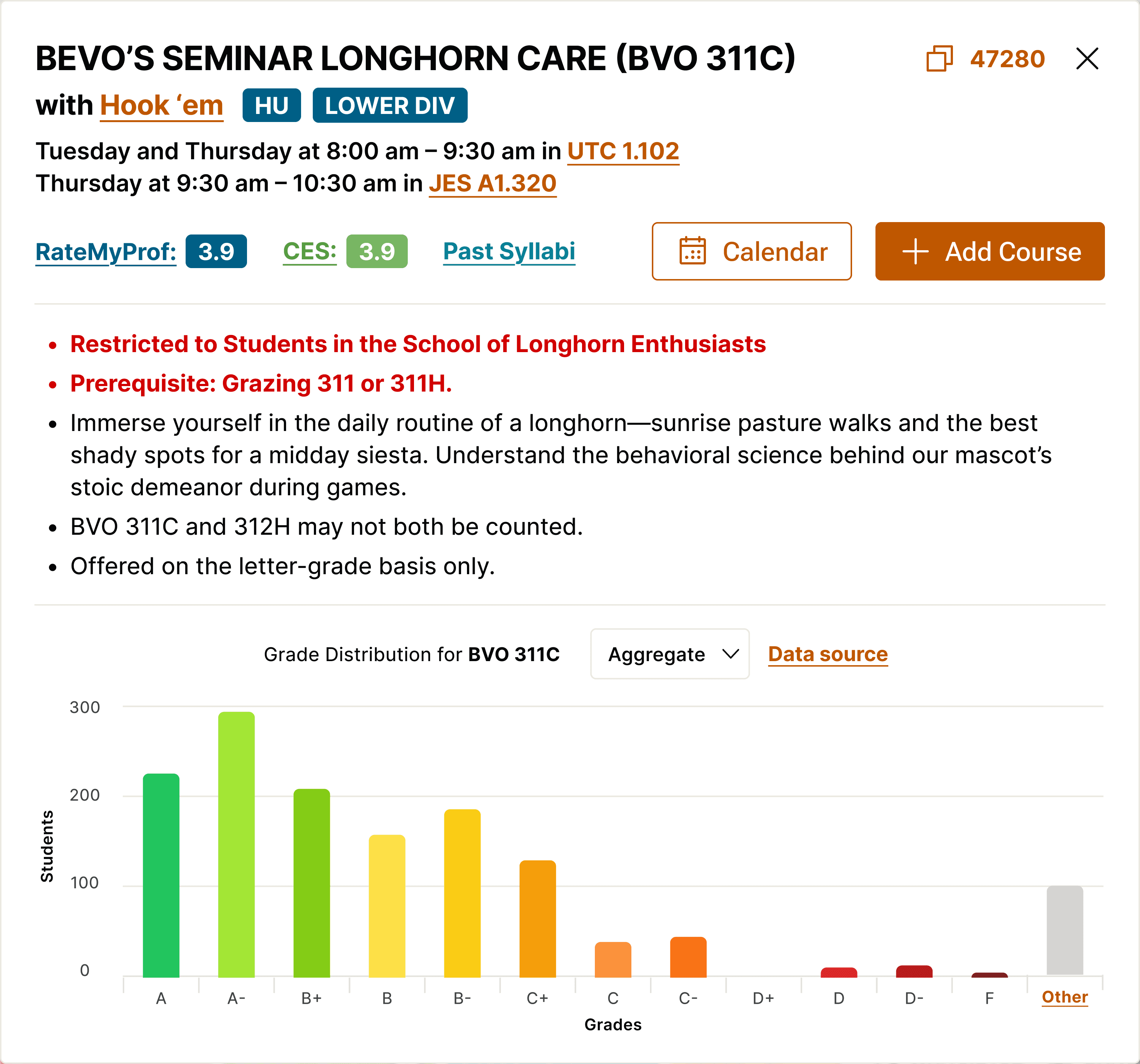
Clarifying button hierarchy and calendar access
During usability testing, we noticed that 40% of users overlooked the calendar button on the course modal. To address this, we made the button more visible while also simplifying the existing button hierarchy. We also surfaced key metrics such as Rate My Professors scores and course evaluation data so users can see important information at a glance without navigating to external sites.
BEFORE
AFTER
3/3
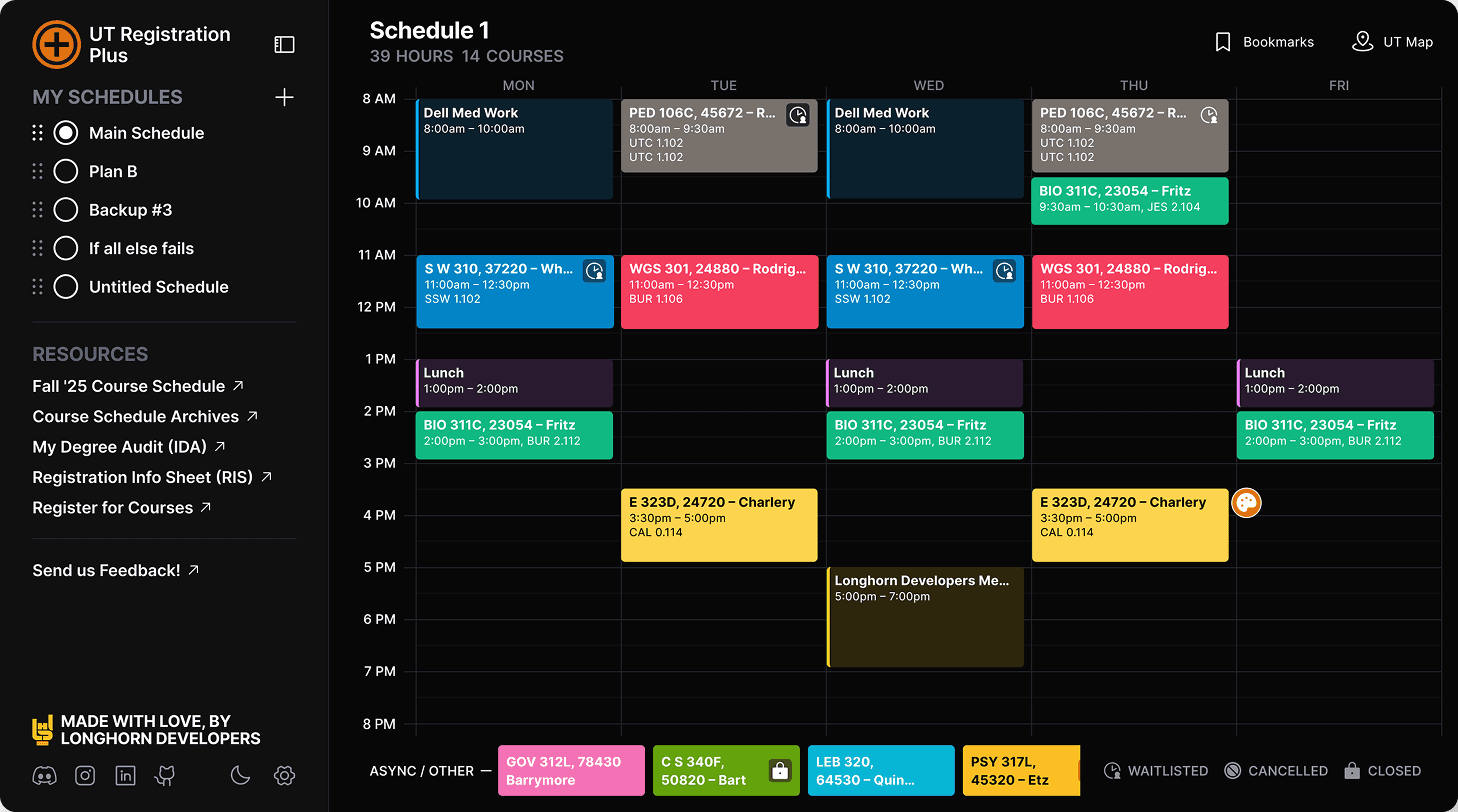
Dark mode with design system updates
Many users have consistently requested dark mode. I designed a full dark mode version of UTRP along with new dark mode tokens for the broader Longhorn Developers design system.
RESEARCH
Tackled research from three directions to build a comprehensive picture
Given the resources available and the unknowns we wanted to uncover, I conducted competitive analysis to understand the market, affinity mapped existing feedback, and ran a usability test.
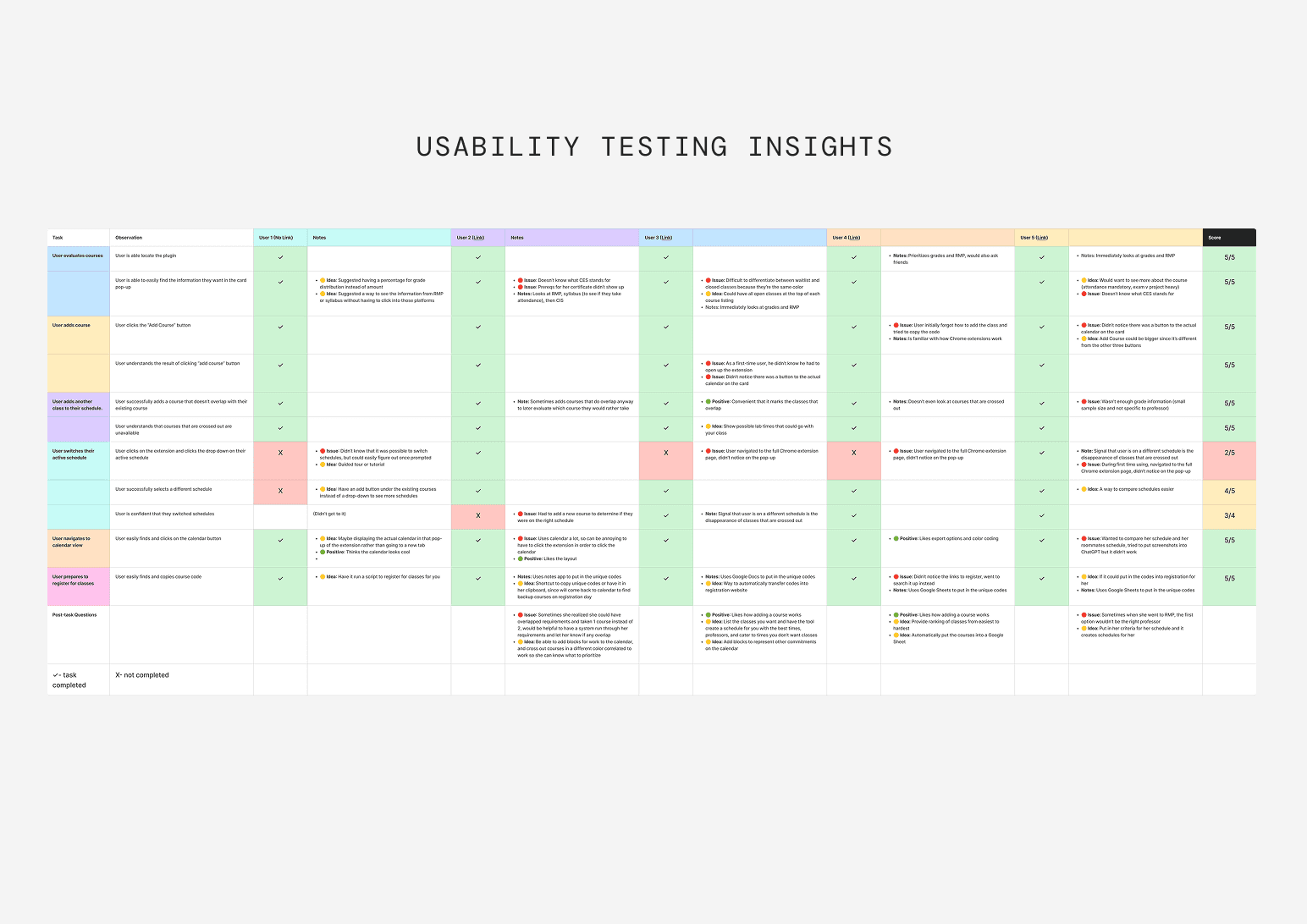
Usability testing with five users on key tasks
I moderated five usability tests, evaluating participants on success criteria for key tasks. Through this, we identified a critical task where UTRP was falling short.
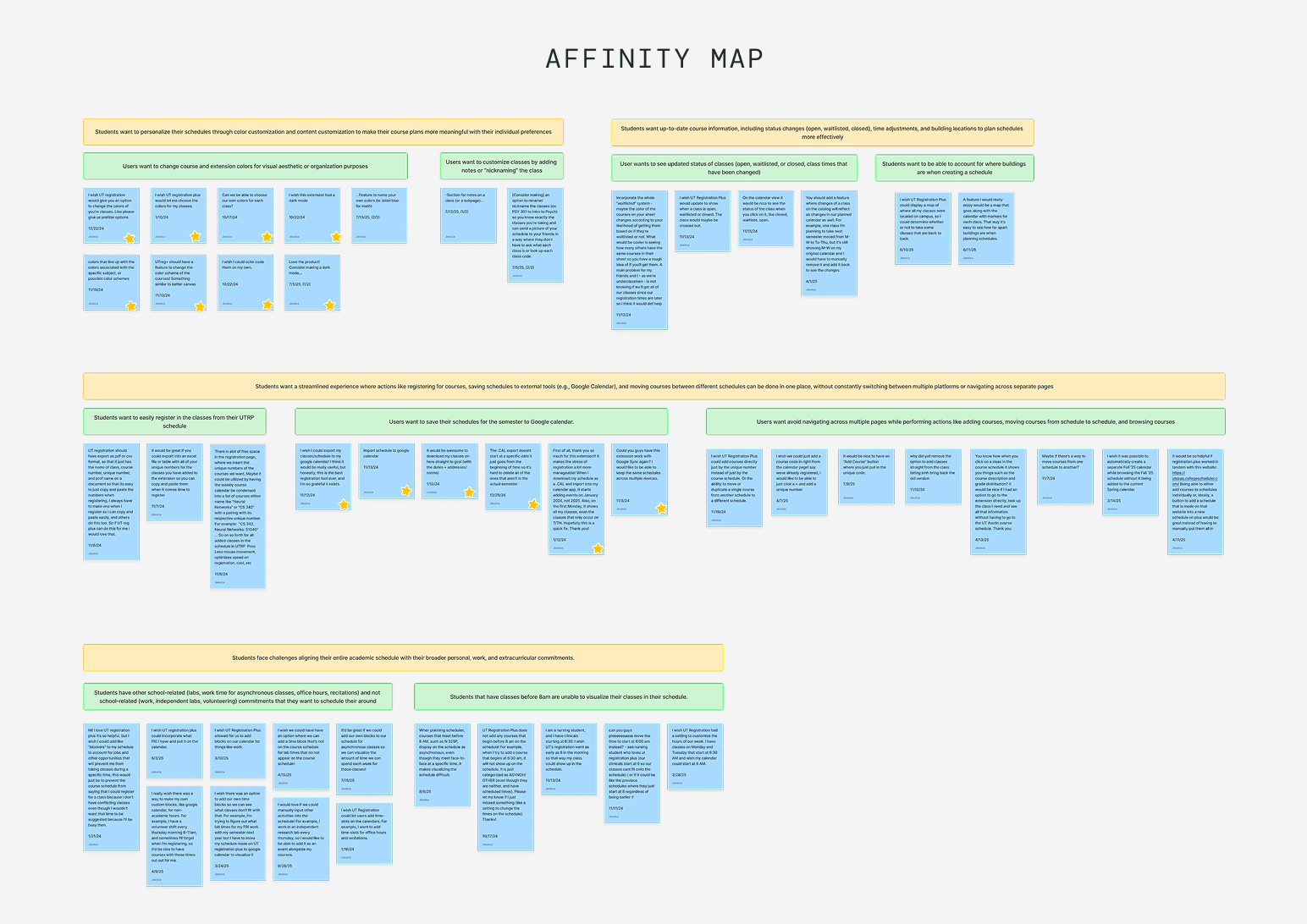
Affinity map with 50+ feedback requests
UTRP has maintained a feedback form for over a year, with some suggestions already addressed and others still outstanding. I organized over 50 pieces of feedback into key themes to identify what issues still needed attention.
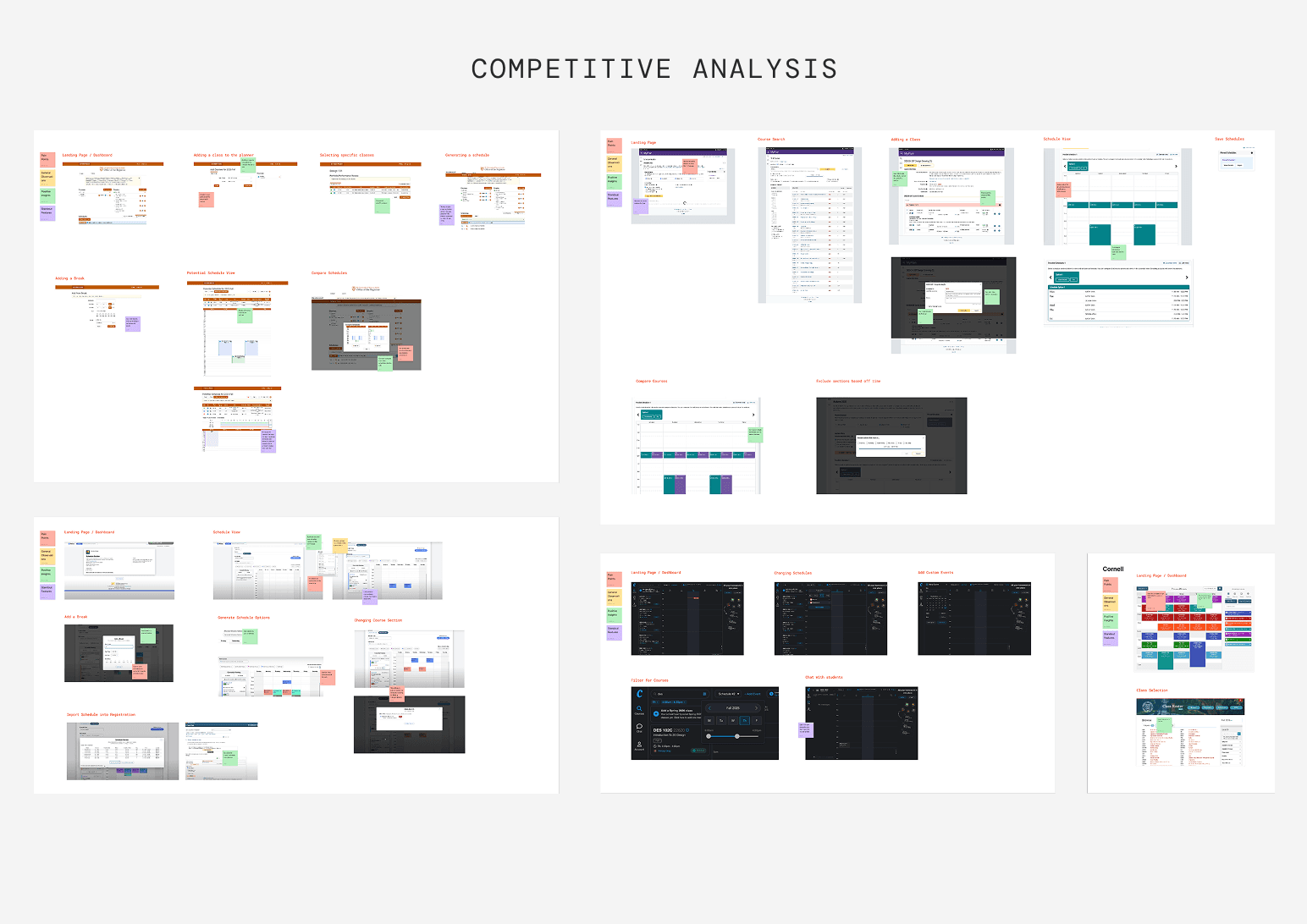
Survey of similar platforms
I selected a variety of platforms, including a direct competitor, platforms from similar universities, and more experimental solutions, to gain insights and identify best practices.
INSIGHTS TO ACTION
Consolidating findings into an actionable plan
To turn our research insights into actionable results, I summarized the findings in a table and collaborated with the PM to create a prioritized roadmap.
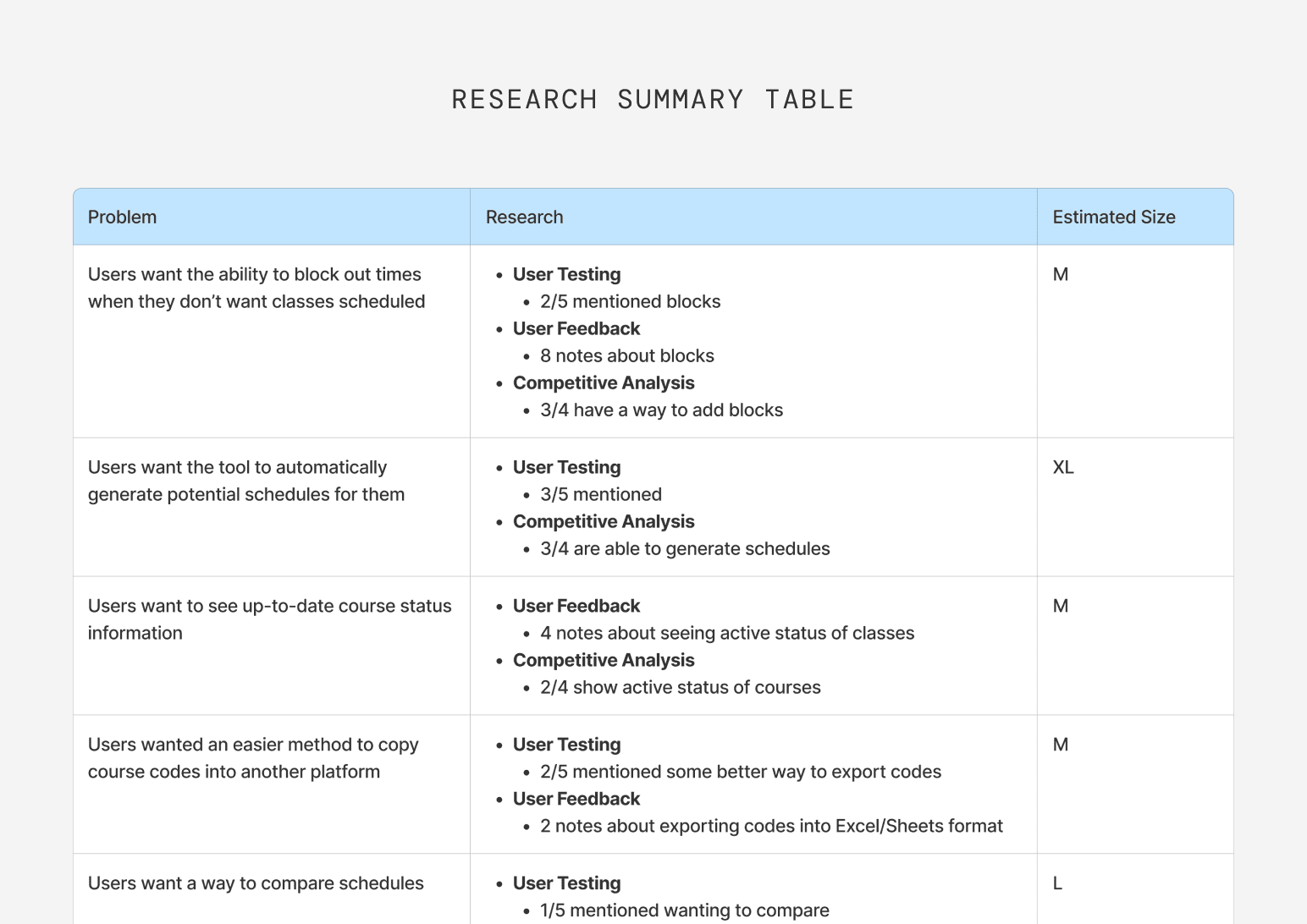
Synthesizing findings from all research methods into a table
To make informed decisions about what to prioritize, I created a chart that compiled the main problems, the research supporting each, and used t-shirt sizing to estimate the scope of each project.
Creating a roadmap with PM and technical lead
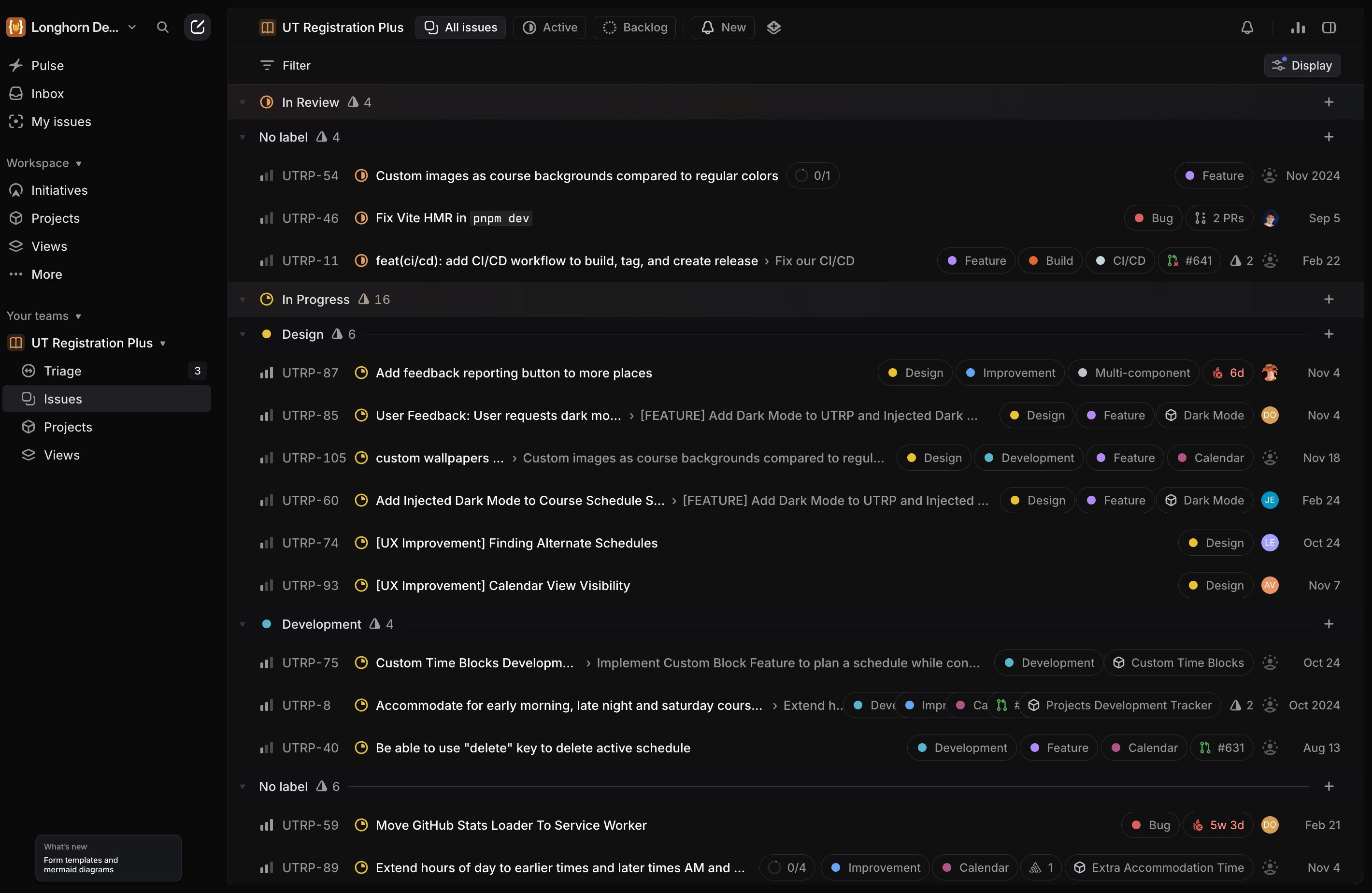
Using my research table, I met with the PM and technical lead to assemble a roadmap and plan three sprints for the semester. We maintained and tracked progress on this roadmap through Linear.
DESIGN SOLUTIONS
Moving from ideas to design solutions
Now that we knew what to prioritize, we began addressing the core problems in our first sprint.
Leading my design fellows
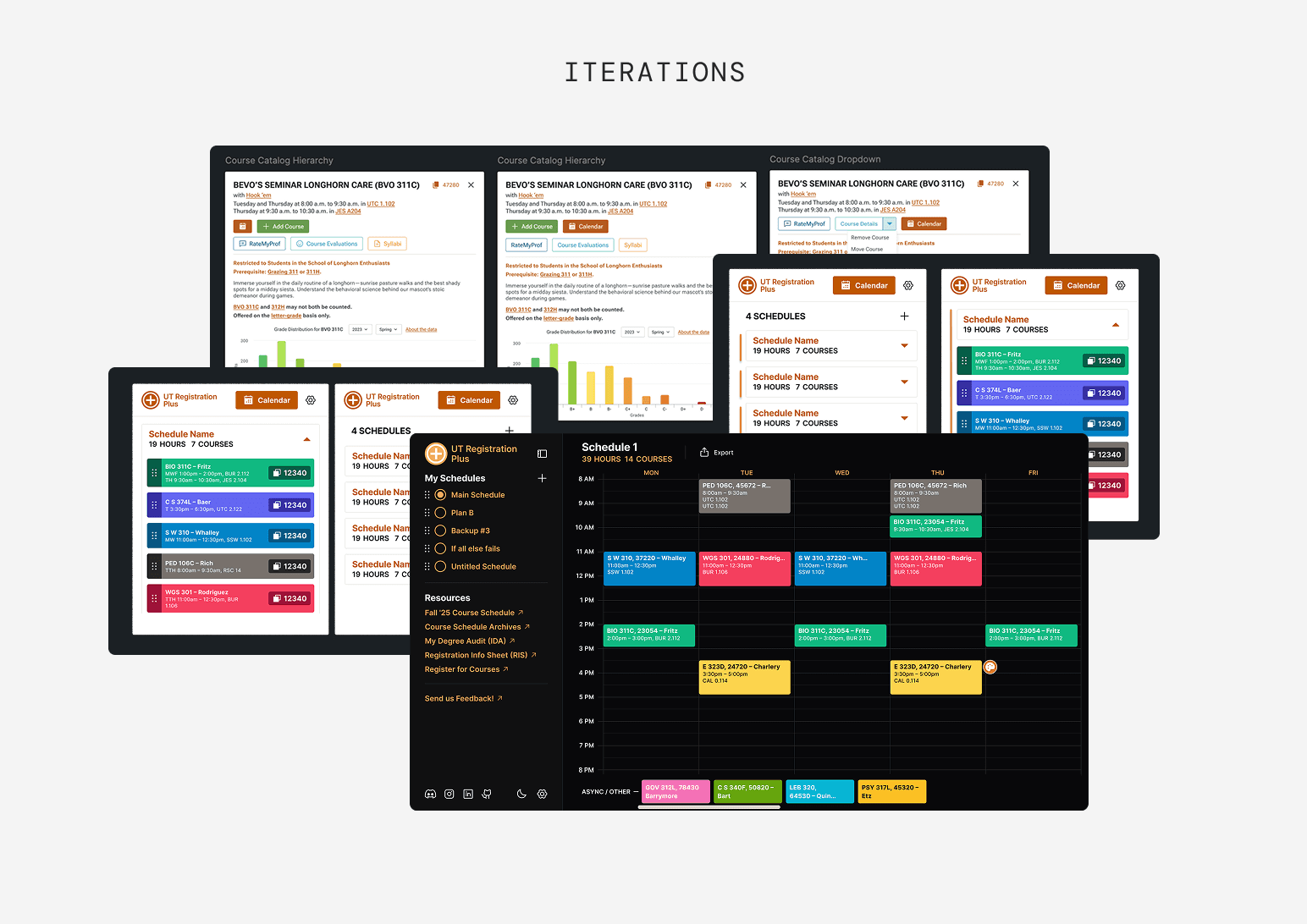
As the product design lead, I organized and guided all design efforts for the project. I worked closely with two design fellows, assigning each a project that aligned with their interests and strengths. I checked in regularly, provided feedback throughout each iteration, and ensured our work stayed aligned with our research insights and product goals.
Cross collaboration with developers and our Design Director
We met weekly with our full team, including developers, to share our design progress and check feasibility early. While working on the dark mode design system, I collaborated closely with our design director to create a token framework that could scale beyond UTRP and support other Longhorn Developers projects.
REFLECTION
My key learnings from this project
Two minds are better than one
There are many moments were I felt stuck, but bouncing ideas with other designers helped me ideate and move forward
Interpreting user's intent
Sometimes there is a deeper meaning behind what users say; Keep asking questions to drill down to the core problem!
What's in store for the future…
Usability testing, again!
Another round of usability testing will confirm whether our changes actually improved the issue at hand
Onto sprint 2…
Following our roadmap, there are more features to implement!