
INTRODUCTION
Gen Z is spending more on travel than any previous generation their age — and AI tools are racing to serve them
Expedia and its competitors have been rapidly rolling out AI-powered features, such as smart filters, AI summaries, natural language search, and Q&A bots. While these features are for all travelers, Gen Z stands out as the segment most primed to engage; They're among the biggest travel spenders and the fastest AI adopters of any demographic.

AI-powered features across competing online travel agencies
PROBLEM
Expedia's AI Filters feature isn't capturing the users most likely to adopt it
Despite being the highest-potential audience for these tools, Gen Z hasn't been studied. This research set out to change that — investigating how they navigate the travel search experience, where friction lives, and where AI can actually earn their trust.
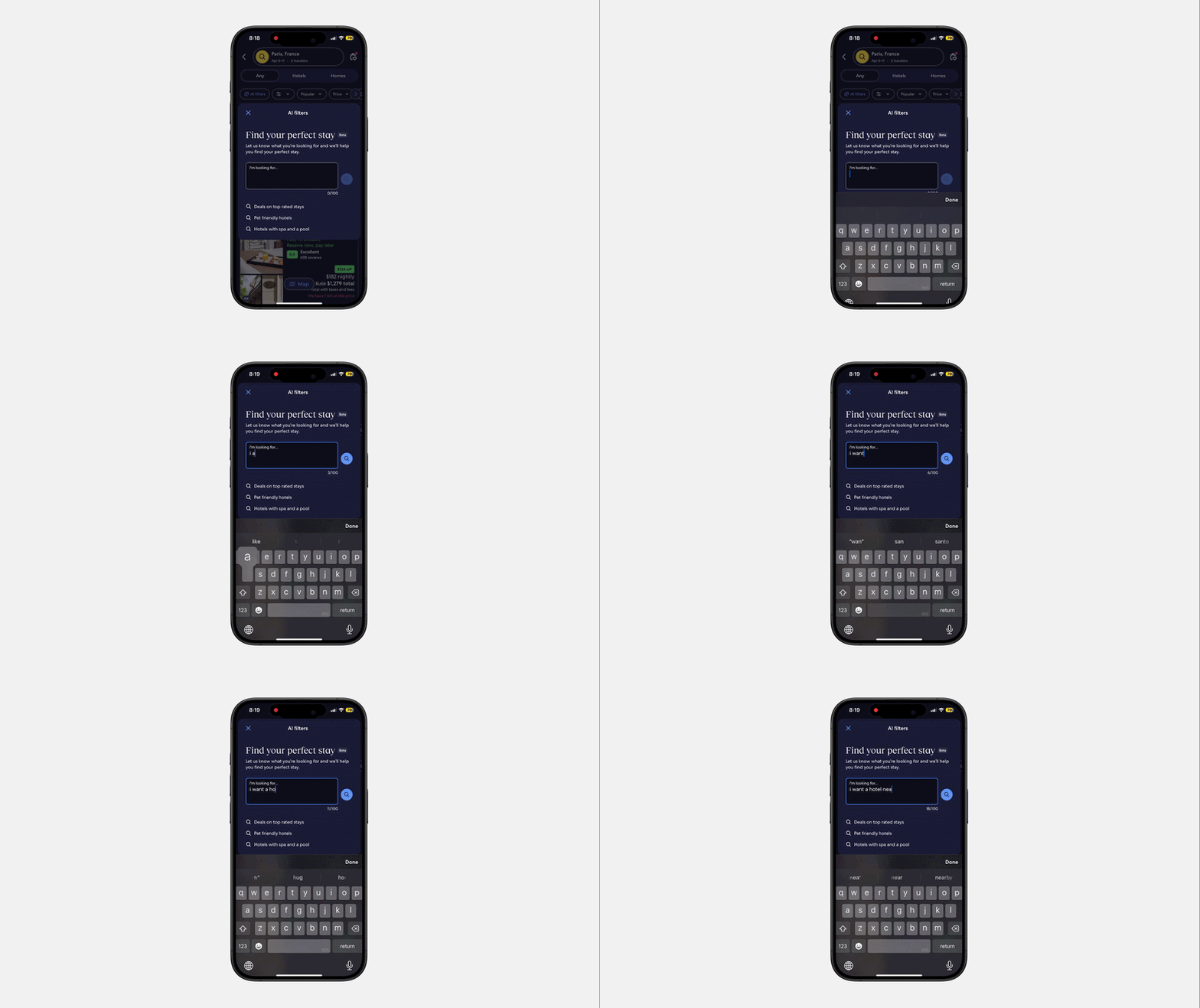
Expedia's current AI Filters
SOLUTION PREVIEW
An AI-prototyped redesign of Expedia's filters, backed by four research insights

1/2
A personalized starting point, not a blank slate
Instead of an empty input box, users see a curated set of interest tags drawn from their past trips and behavior — giving them an immediate, low-effort way to tell the AI what kind of stay they’re looking for.

2/2
AI-generated filters the user controls
Based on the selected tags, the AI proposes a set of filters. Users can tap to add or remove each one — keeping the intelligence of AI while giving travelers the sense of control they need to trust the result.
RESEARCH
Mapping what AI in travel already looks like
I reviewed AI-powered features across six major OTAs — Booking.com, Tripadvisor, Google Travel, Airbnb, Kayak, and Priceline — plus non-travel platforms including ChatGPT, Spotify, and Perplexity. One tension emerged that would shape the rest of the project: Gen Z embrace AI for ideation, but trust drops sharply when accuracy or commitment is involved.
RESEARCH
Six 30-minute moderated sessions with Gen Z travelers
Sessions covered four research areas: how inspiration becomes a booking, how Gen Z discovers and uses filters, how they engage with AI during planning, and what builds or breaks trust in AI-driven results. Each session ended with a live usability task — searching for a Paris stay on the Expedia app and evaluating the AI Filters feature firsthand. Here's a look into the participants:
Participants
Trip Timing
Trip Details
Planning Phase
College Student
In a week
Traveling to San Diego with 3 friends during spring break
Flights and Airbnb planned. Need to plan activities.
College Student
In a week
Meeting friends in Budapest and Sweden over spring break
Flights, housing, and most activities planned and booked.
College Student
In a week
Going to China and Singapore to see family and friends over spring break
Transportation and stays planned. Leaving everything else up to friends and family.
College Student
In a week
Traveling Europe with friends over spring break
Flights and stays planned. Need to plan activities.
College Student
In a few months
Going to Japan with friends over the summer
Only flights booked.
Working Professional
In a few months
Traveling Spain with friends
Booked flights, trains, hotels, Airbnbs. Needs to book excursions
KEY INSIGHTS
What emerged across all six sessions
1/4
Friends, family, and social media plant the idea, and school or work breaks make Gen Z act on it
Price determines the exact dates and solidifies feasibility of the trip.
2/4
Gen Z seek the cheapest option that still meets their standards
Travelers have no hard budget or brand loyalty in mind hunt for options that clears their bar for location and quality.
3/4
AI is powerful in ideation but Gen Z don’t trust it where accuracy and personal information is involved
Gen Z doesn’t trust AI to surface up-to-date information and they draw the line at booking. Users verify information through sources from real people.
4/4
The AI filter doesn’t yet show a clear advantage over manual filtering, and users have noticed
Users defaulted to typing the same criteria they'd apply by hand, and some preferred manual filters precisely because they could see and verify exactly what was being applied.
RECOMMENDATIONS
Rapid prototyping to turn insights into concrete recommendations
With four insights mapped, I used Claude code to move quickly from research to interactive mockup — keeping focus on design thinking rather than production. The central bet: replace the blank input with selectable interest tags that surface relevant filters before users have to type a word.
REFLECTION
What I learned along the way
Special thank you to Jerica Bornstein and the Expedia UX Research team for their mentorship and guidance throughout this project.
Conversation, not interview
Treating interviews as conversations rather than scripted Q&As surfaced insights I wouldn't have uncovered by sticking rigidly to my questions. The natural back-and-forth opened doors the script alone couldn't.
Stay curious about new tools
Staying current on emerging tools, like Claude's Code-to-Figma workflow, let me build an accurate prototype fast. I wouldn't have known this was possible otherwise.
If I had more time…
Test the redesign with real users
The tag-based recommendation is a hypothesis. A usability study comparing it to the current blank input would confirm whether it actually reduces friction.
Expand beyond Gen Z
As Expedia caters to all users, testing the same questions with Millennials and older travelers would reveal whether the AI trust gap is generational, or universal.